How to Concentrate on Study: A Complete Guide for Competitive Exams Aspirants
How to Concentrate on Study: A Complete Guide for Competitive Exams Aspirants
Concentration is the backbone of effective studying, especially for competitive exams like IITJEE, NEET, IAS, UPSC, REET, CAT, GATE, UGCNET, GPAT. Many students study for long hours but still struggle to retain concepts due to poor focus. The good news is that concentration is a skill—you can train your brain to focus better with the right strategies. This article by GPATINDIA will help you improve concentration, productivity, and learning efficiency.
1. Understand Why Concentration Breaks
Before fixing the problem, identify the reasons behind lack of focus:
- Mobile phone and social media distractions
- Irregular sleep schedule
- Studying without a plan
- Mental stress or anxiety about results
- Long, uninterrupted study sessions without breaks
Once you know your distractions, managing them becomes easier.
2. Create a Dedicated Study Environment
Your surroundings directly affect your concentration.
- Study at a fixed place every day
- Keep your study table clean and clutter-free
- Avoid studying on the bed
- Ensure proper lighting and ventilation
- Keep only study-related materials on the desk
A disciplined environment trains your brain to switch into “study mode.”
3. Make a Realistic Study Schedule
Studying without a plan leads to confusion and burnout.
- Break your syllabus into small topics
- Allocate specific time slots for each subject
- Study difficult subjects when your mind is fresh
- Include revision and practice time daily
For GPAT aspirants, consistency matters more than studying for long hours.
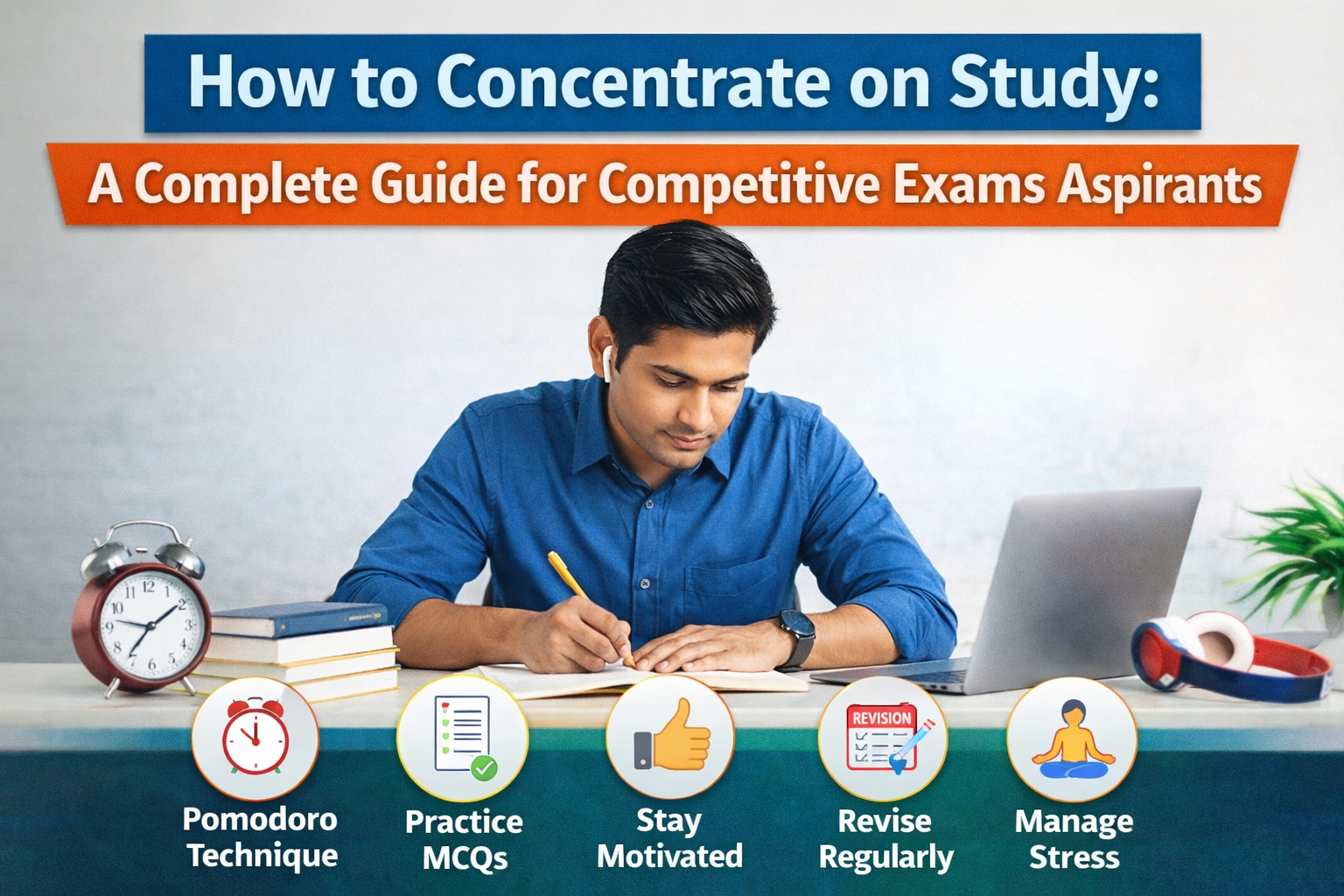
4. Use the Pomodoro Technique
One of the most effective methods to improve focus is the Pomodoro Technique:
- Study for 25 minutes with full concentration
- Take a 5-minute break
- After 4 cycles, take a longer break (15–20 minutes)
This method prevents mental fatigue and improves retention.
5. Keep Your Mobile Phone Away
Mobile phones are the biggest enemy of concentration.
- Keep your phone in another room while studying
- Use apps that block social media during study hours
- Switch off unnecessary notifications
Remember: One notification can break 20–30 minutes of deep focus.
6. Practice Active Learning
Passive reading reduces attention. Instead, use active study techniques:
- Make short notes and flowcharts
- Teach the topic to yourself or a friend
- Solve MCQs after every topic
- Revise using flashcards
Active learning keeps your brain engaged and improves concentration.
7. Take Care of Your Health
A healthy body supports a focused mind.
- Sleep at least 7–8 hours daily
- Eat balanced meals and stay hydrated
- Avoid excessive caffeine
- Do light exercise or yoga regularly
Even a 10-minute walk can refresh your brain.
8. Control Stress and Anxiety
Fear of failure often reduces focus.
- Set achievable daily goals
- Avoid comparing yourself with others
- Practice deep breathing or meditation
- Trust your preparation
A calm mind learns faster and remembers longer.
9. Study with Purpose, Not Pressure
Instead of asking “How many hours should I study?”, ask:
“How much did I understand today?”
Quality study always beats quantity.
Conclusion
Concentration is not something you are born with—it is something you build daily. By following the right study habits, managing distractions, and taking care of your health, you can significantly improve your focus and performance in GPAT preparation.
Stay disciplined, stay consistent, and trust the process.
– Team GPATINDIA