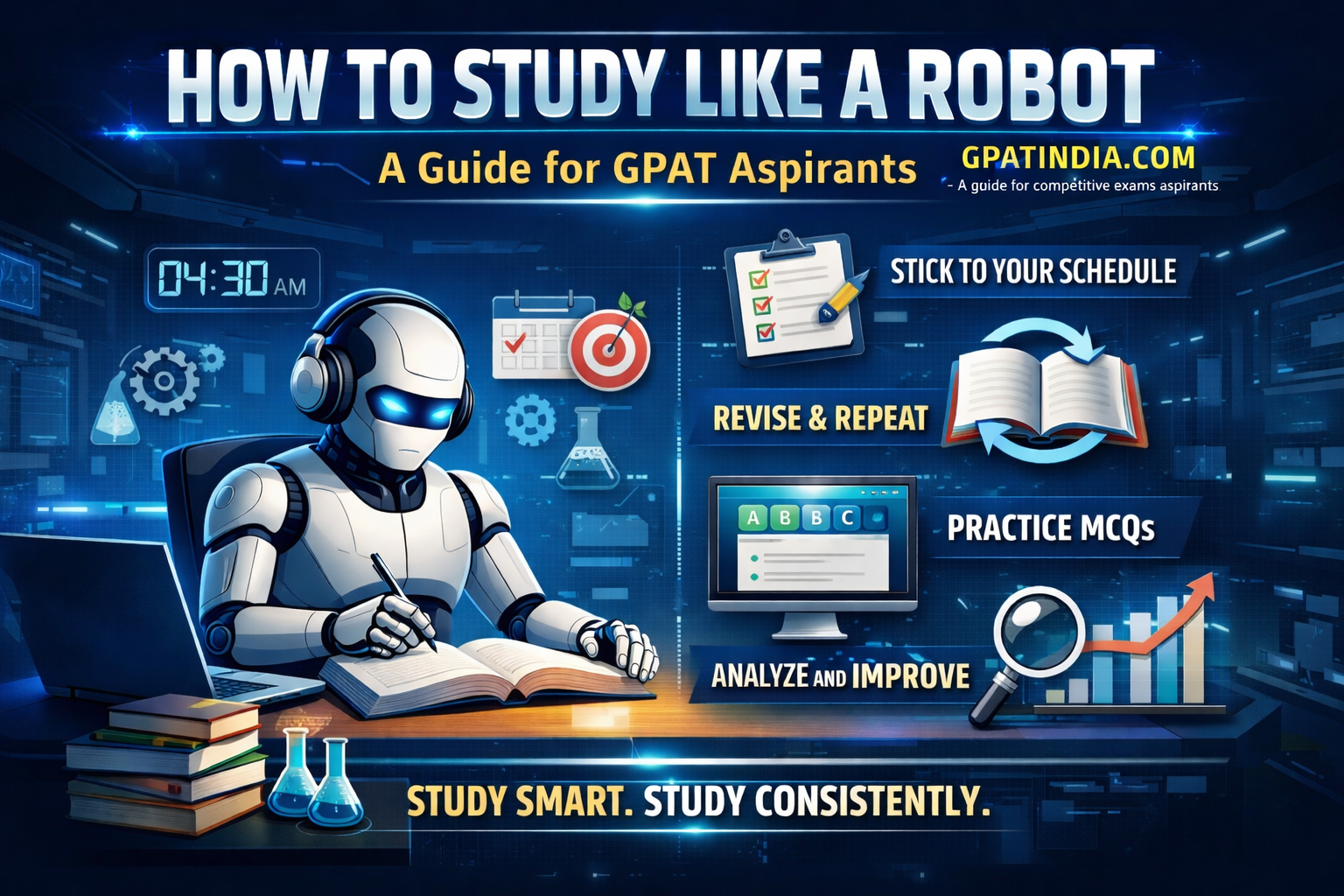
How to Study Like a Robot: A Smart Strategy for Competitive Exams Aspirants
Preparing for Competitive exams is not about studying 12–14 hours daily with emotions, motivation swings, or burnout. It’s about consistency, systems, and discipline. When toppers say “study like a robot”, they don’t mean becoming emotionless — they mean following a fixed, non-negotiable study process every single day.
This blog will help Competitive exams aspirants build a robot-like study system that works even when motivation is zero.
What Does “Study Like a Robot” Mean?
Studying like a robot means:
- No dependence on mood or motivation
- Fixed routine, same time, same method
- Repetition and revision without excuses
- Data-driven preparation (tests, analysis, correction)
Robots don’t overthink. They execute commands daily.
Step 1: Build a Fixed Daily Study System
A robot follows a program. You need one too.
Ideal Competitive exams Daily Study Structure (6–8 Hours)
Slot 1: Concept Learning (2–3 hours)
- One subject only
- Read standard notes / video lectures
- No phone, no multitasking
Slot 2: MCQ Practice (2 hours)
- Same topic MCQs (50–100 questions)
- Time-bound practice
Slot 3: Analysis (1–1.5 hours)
- Why correct?
- Why wrong?
- Note traps, formulas, keywords
Slot 4: Revision (1–1.5 hours)
- Short notes
- Mistake notebook
- Flashcards
👉 Same structure daily, only subject changes.
Step 2: Emotion-Free Study Rule
Robots don’t say:
- “Aaj mood nahi hai”
- “Kal zyada padhunga”
- “Topic boring hai”
Apply the 30-Minute Rule
If you don’t feel like studying:
- Sit for just 30 minutes
- Start anyway
Most of the time, momentum builds automatically.
Step 3: Use the GPAT Syllabus Like a Command List
Robots work on checklists.
- Print GPAT syllabus
- Break into micro-topics
- Mark:
- ❌ Not studied
- ⚠️ Weak
- ✅ Strong
Revise ❌ and ⚠️ repeatedly until all turn ✅.
Step 4: Revision = Robot Fuel
GPAT is not about how much you study — it’s about how often you revise.
Robot Revision Formula
- 1st revision: Same day
- 2nd revision: After 7 days
- 3rd revision: After 21 days
- 4th revision: Before exam
No revision = No selection.
Step 5: MCQs Are the Core Program
Robots learn by feedback. GPAT rewards MCQ-based thinking.
- Daily MCQs are compulsory
- Maintain an Error Book:
- Wrong concepts
- Guess-based mistakes
- Silly errors
Revise error book weekly.
Step 6: Mock Tests Without Fear
Robots don’t fear results; they analyze data.
- Start full-length mocks early
- Don’t skip analysis
- Identify:
- Time-consuming sections
- Weak subjects
- Repeated mistakes
Marks improve through analysis, not tests alone.
Step 7: Digital Discipline Mode
Robot rules for distractions:
- Phone on airplane mode during study
- Social media only after daily targets
- Use apps only for study
Remember: GPAT rewards focus, not notifications.
Step 8: Consistency Beats Intelligence
Many average students crack GPAT. Many intelligent students fail.
Difference? Robotic consistency for 6–8 months.
Even 5 focused hours daily > 12 distracted hours.
Final Thought: Be Human, Study Like a Robot
You can have emotions. You can feel tired.
But when it’s study time — execute the system.
GPAT selection is not magic. It’s a result of boring, repetitive, disciplined actions done daily.
“Motivation is temporary. Systems are permanent.